
Aadharudyam Header Banner

All the information published on this portal is for information purpose only. We are not associated or linked with the Msme Department. Please Read our Term and Condition before Apply. All the information published on this portal is for information purpose only. We are not associated or linked with the Msme Department. Please Read our Term and Condition before Apply.

Role of Udyam registration
Uncategorized

Role of Udyam registration in MSME Loan Approvals

Role of Udyam registration For many MSMEs, getting a loan was once a slow and challenging process. Udyam registration changed this by offering a simple and reliable registration system for small businesses. Once registered, MSMEs gained official recognition that banks could easily trust. This made loan verification faster and reduced the need for repeated paperwork. Udyam registration also helped businesses become eligible for special MSME loan schemes and priority sector benefits. By improving transparency and trust, it significantly increased the chances of loan approval and supported the financial growth of small enterprises. How Udyam registration Revolutionized Onboarding The launch of Udyam registration turned a slow, manual process into a fast-track digital experience. It acted as a trust-builder for small firms, making it significantly easier to access subsidized capital and government perks. By allowing for direct self-registration, it removed the need for brokers and consultants, letting entrepreneurs claim their official business status in just a few clicks. Why MSME Loans Are Important Small businesses need loans for many reasons, such as: Starting a new business Buying machinery or equipment Expanding operations Managing working capital Hiring staff Handling cash flow during slow seasons Banks and financial institutions are often cautious while lending to small businesses because of risk. Udyam registration helped reduce this risk by giving lenders official proof of business identity. How Udyam registration Helped in MSME Loan Approvals 1. Proof of MSME Status One of the biggest benefits of Role of Udyam registration was that it served as official proof that a business is an MSME. Banks prefer lending to registered MSMEs because: They are recognized by the government Their business details are already verified They qualify under MSME lending guidelines This made loan processing faster and smoother. Getting Loans Faster Banks used to spend weeks checking old documents. Registration changed that: It kept all your business facts simple and clear. Verification was done instantly through Aadhaar. The certificate acted like a “green light” for bank managers. This helped owners get their loan money much sooner than before. Priority Bank Support Under government rules, MSMEs are at the top of the list for bank support. Banks are required to give a big slice of their total lending to businesses like yours. This makes it easier for you to get a loan compared to big companies. Udyam registration made it easier for banks to: Identify eligible MSMEs Meet PSL targets Approve loans with confidence This increased the chances of loan approval for registered businesses. 4. Access to Collateral-Free Loans One of the most powerful benefits linked with Role of Udyam registration was eligibility for collateral-free loans under government schemes such as: Credit Guarantee Fund Trust for Micro and Small Enterprises (CGTMSE) MUDRA Loans Under these schemes: Businesses could get loans without offering security The government provided a guarantee of coverage to banks Risk for lenders was reduced This was a huge relief for small entrepreneurs who did not own property or assets. 5. Lower Interest Rates Banks often offered lower interest rates to Role of Udyam registration-registered businesses because: Government schemes supported MSME lending Risk was shared through guarantee programs MSMEs were considered a priority segment Even a small reduction in interest rate helps businesses save a lot of money in the long run. 6. Easier Working Capital Loans Many MSMEs face cash flow issues due to delayed payments or seasonal demand. Role of Udyam registration helped businesses get: Overdraft facilities Cash credit limits Short-term working capital loans Banks trusted registered MSMEs more, making it easier to approve such facilities. 7. Support During Government Relief Programs Identifying eligible businesses Speeding up emergency credit approvals Providing moratoriums and interest benefits Registered businesses were often the first beneficiaries. 8. Improved Creditworthiness Udyam registration registration improved a business’s financial credibility. It showed lenders that: The business is serious and compliant It operates within government norms It plans for long-term growth This positive image helped during loan negotiations and renewals. Documents Required Along with Udyam registration for Loans While  Role of Udyam registration simplified loan approvals, banks still required some basic documents, such as: Udyam registration Certificate PAN card Aadhaar card Bank statements Business address proof Income or turnover details However, the presence of Role of Udyam registration reduced repeated verification and confusion. Transition from Udyog registration to Role of Udyam Registration In July 2020, the government replaced Role of Udyam registration with Udyam Registration. Businesses were advised to migrate to the new system. Role of Udyam Registration continues all the benefits of Udyam registration and offers even more transparency. For loan purposes today: Banks accept Role of  Udyam Registration Old Udyam registration holders are encouraged to update Loan benefits remain uninterrupted after migration Why MSMEs Should Stay Registered Whether it was Role of Udyam registration earlier or Role of Udyam Registration  now, staying registered is essential because: Loan approvals become easier Government support is accessible Business credibility improves Growth opportunities increase Unregistered businesses often face loan rejections or higher interest rates. Conclusion Role of Udyam registration was a huge help in changing how small business loans work in India. It gave small shops an official name, cut out the extra paperwork, and helped banks trust business owners more. By making it easier to get loans without giving security, offering cheaper interest, and speeding up the wait time, it helped millions of businesses stay alive and grow. Even though we now use Udyam, the old system changed the way money works for small businesses. For any owner, being registered is more than just a piece of paper—it is a strong tool to keep your money safe and help you succeed.

Role of Udyam Registration in MSME Growth Strategy Blog Image
Uncategorized

Role of Udyam Registration in MSME Growth Strategy

In the competitive world of Indian commerce, formal business recognition is a powerful advantage. The role of Udyam Registration in MSME Growth Strategy is ver big and it  is no longer just a government requirement, it is the concern for every modern business strategy. It serves as the vital link that helps a Micro or Small unit transition from an informal operation into a globally respected brand. By securing this registration, you give your enterprise to recognise legally. It acts as a silent partner, opening doors to financial and legal benefits that were once impossible to reach. Here is a detailed look at how Udyam Registration fuels your journey toward sustainable business growth. Why The Role of Udyam Registration in MSME Growth Strategy is Very Imaportant Success in the modern economy requires a formal foundation. Udyam Registration acts as the ultimate tool for Business Formalisation, offering. Here are why the role of Udyam Registration in MSME Growth Strategy is important. Verified Legal Standing: Your URN provides instant proof of existence, acting as a “Business Aadhaar” for all your licensing, banking, and legal needs. Trust Through Data: By syncing with PAN and GST, Udyam creates a fraud-proof digital profile. This transparency is the #1 factor big corporations and investors look for before entering into a partnership. By registering, you move from the “shadow economy” into the spotlight, gaining the credibility required to secure larger contracts and professional investments. Udyam Registration: The Certificate for Low Cost Business Funding In the competitive landscape of 2026, the cost of capital can make or break your MSME Registration.  Without Udyam, small firms are often forced to accept high-interest loans from informal sources. Holding a valid Udyam Certificate levels the playing field by providing: Asset-Free Borrowing (CGTMSE): Access government-guaranteed loans up to ₹10 Crore. Banks are more willing to lend because the government backs your credit, allowing you to scale without the stress of providing physical collateral. Direct Interest Savings: Benefit from interest subvention schemes that slash your borrowing costs by 2% to 5%. This “interest rebate” acts as a silent grant from the government, significantly reducing your monthly EMIs and improving your business’s overall cash flow. Payment Risk Reduction: The 45-Day Payment Rule Cash flow is the heartbeat of a business. The most significant strategic advantage of Udyam is the protection offered under the MSME Development Act. The Deadline: Buyers are legally obligated to pay Udyam-registered suppliers within 45 days of accepting goods or services. Compound Interest: If they fail to pay, you can claim compound interest at three times the bank rate. This protection ensures that large corporations cannot “bully” small suppliers by holding onto their payments for months. Market Expansion: Government Tenders and Exports If your growth strategy involves working with the government or international buyers, Udyam is non-negotiable. Public Procurement Policy: The central government has a mandate to procure at least 25% of its requirements from MSMEs. Without a registration certificate, you are locked out of this massive market. EMD Waivers: Usually, bidding for a tender requires an Earnest Money Deposit (EMD). Registered MSMEs are often exempted from this, allowing you to bid for multiple projects without locking up your working capital. Why Udyam Registered Businesses Lead the Market Success is depends on transparency and speed. Registered businesses move faster because they have the government’s backing. Since the Role of Udyam Registration in MSME Growth Strategy work with Udyam Registered Business Here is how they beat the competition: Financial Safety: While unregistered firms struggle with high-interest private debt, registered units access collateral-free loans up to ₹10 Crore. Tax & Cost Efficiency: From 50% subsidies on Trademarks and Patents to lower electricity tariffs, registered businesses keep their costs low. They also benefit from presumptive taxation, keeping more profit for reinvestment. Market Access: With your Udyam ID, you get priority listing on the GeM Portal, opening doors to billions in government procurement that unregistered competitors simply cannot touch. Cost Reduction Strategies Growth isn’t just about making more money; it’s about spending less. Udyam provides several “hidden” cost-saving avenues: IPR Protection: A brand is a business’s most valuable asset. With a Udyam certificate, the government slashes your Trademark and Patent registration fees by 50%. Utility Savings: Many industrial hubs and states offer a direct rebate on electricity bills for registered units. ISO Certification: To go global, you need quality standards like ISO. The government often reimburses the expenses incurred in obtaining these certifications, making “Global Quality” affordable for “Local Businesses.” Digital Transformation and Subsidy Access The modern Udyam portal is a gateway to the “ZED” (Zero Defect, Zero Effect) scheme and other digital incentives. Modernisation: Access to credit for buying high-end machinery is easier when you are part of the Udyam ecosystem. Exhibition Support: The government often covers stall charges for MSMEs at international trade fairs, giving you a global stage at a fraction of the cost. Keeping Your Growth Status Active To ensure your Udyam Certificate remains a powerful asset for your business, follow these three essential maintenance rules: Automated Annual Sync: The Udyam portal now automatically pulls your latest turnover and investment data from the GST and ITR databases. To keep your classification (Micro, Small, or Medium) accurate, ensure your tax filings are completed on time and reflect your true business scale. Activity Precision (NIC Codes): If you expand or pivot—such as moving from pure manufacturing into retail trading—you must update your NIC (National Industrial Classification) codes. Accurate codes are the “key” that unlocks specific government subsidies and specialized bank schemes. The “One Identity” Rule: Under current regulations, one Aadhaar number is linked to only one Udyam ID. If you open a new branch or start a second vertical, do not register a new ID. Instead, add the new location as a “Unit” under your existing registration to keep all your benefits consolidated. Conclusion:  The government has set high ceilings for MSMEs, allowing a “Medium” enterprise to have up to ₹250 Crore in turnover. Udyam Registration is the vehicle that helps you travel from

Udyam Registration vs Shop Act License
Uncategorized

Udyam Registration vs Shop Act License

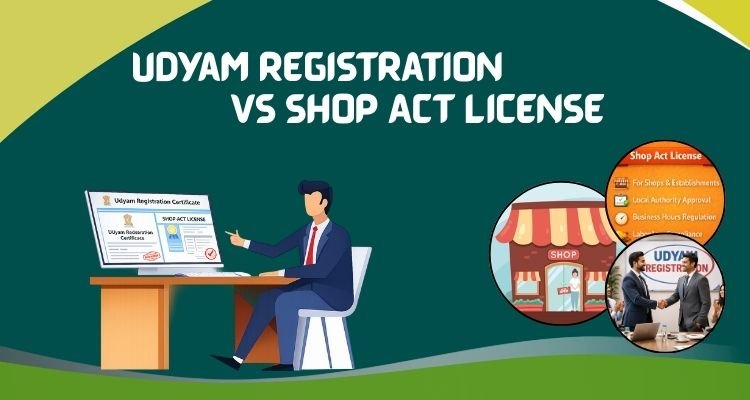
Udyam Registration vs Shop Act License When you begin a business journey in India, dealing with registrations and licenses can be confusing. Among the most commonly misunderstood are Udyam Registration and the Shop Act License. Many assume they are the same, but they serve separate roles. Udyam Registration establishes your identity as an MSME at the central level, whereas the Shop Act License grants legal permission from the state authorities to operate a physical business location. This guide breaks down everything you need to know about Udyam Registration versus the Shop Act License only. Understanding Udyam Registration vs Shop Act License Udyam Registration is a digital certificate given by the Indian government to small businesses. It shows that your business comes under the MSME category. You can understand it as an ID card for your business at the national level. The main goal of Udyam is to help small businesses grow by giving them special benefits. It doesn’t matter if you are running a factory or a consultancy service; if you fall under the investment and turnover limits, you can get Udyam. Why Udyam Registration vs Shop Act License? Easy Loans: Banks love Udyam. It helps you get collateral-free loans (loans without giving any security). Lower Interest: You often get a lower interest rate compared to regular business loans. Subsidies: If you want to register a Trademark or get a Barcode, the government gives you a heavy discount. Protection against Late Payments: This is a lifesaver. If a big company buys from you and doesn’t pay within 45 days, the law helps you get your money with interest. Electricity Bills: Many states offer cheaper electricity rates for businesses that have Udyam Registration. Understanding the Shop Act License (Gumasta) The Shop Act License (often called Gumasta in states like Maharashtra) is a state-level registration. This is governed by the Department of Labour. If you have a physical office, a shop, or even a small warehouse, you usually need this. While Udyam is about “Benefits,” the Shop Act is about “Regulation.” It ensures that you are following the rules regarding your employees, working hours, and the physical location of your business. Why do you need the Shop Act? Legal Permission: It proves that your shop or office is legally allowed to operate in that specific area. Opening a Bank Account: Most banks will ask for a Shop Act license as primary proof of business address to open a Current Account. Staff Rules: It decides how long employees can work, when they get holidays, and ensures a safe working environment. Local Business Identity: It proves that your business is officially recorded in your local area. The Core Differences: Udyam vs. Shop Act To make it easy for you to explain to others, let’s look at the main points where they differ. Authority Udyam is handled by the Central Government (Ministry of MSME). It is valid all across India. Shop Act is handled by your Local State Government or Municipal Corporation. Every state has slightly different rules for the Shop Act. Purpose The purpose of Udyam is Development. The government wants to track how many small businesses exist so it can provide schemes and money to help them grow. The purpose of the Shop Act is Regulation. The state government wants to make sure you aren’t overworking your staff and that your business premises are safe. Cost and Renewal Udyam Registration is completely free and has lifetime validity. Once you get your Udyam number, you don’t need to renew it every year. Shop Act usually involves a registration fee (based on the number of employees). In many states, you have to renew it every 1 to 5 years. Eligibility Udyam is for anyone in Manufacturing or Services. Even a freelancer can get it. The Shop Act is strictly for anyone who has a physical commercial place. Если you are working entirely from home, some states might not require a Shop Act, but almost every shop, hotel, or office needs it. Which one should you get first? This is a common question. The truth is, most successful businesses in India need both. Get Udyam first because it is free, fast, and gives you the “MSME” status immediately. It helps you get government recognition. Get the Shop Act next because it is your proof of address. When you go to a bank to open an account, the bank manager will likely ask for your Shop Act (Gumasta) to verify where your office is located. Important Words You Should Know When you are explaining this to a user, use these “Power Words” to sound professional yet easy to understand: MSME (Micro, Small, Medium Enterprises): The category of businesses that Udyam belongs to. Collateral-Free: A loan where you don’t have to keep your house or land as a guarantee. Current Account: The type of bank account used for business (Shop Act is usually required for this). Compliance: Following the rules and laws. Shop Act is a “compliance” requirement. Subsidy: Financial help or a discount provided by the government. Validity: How long the document is “alive” or legal. Summary for the User If a user asks you for a quick answer, tell them this: “Udyam is for Benefits; Shop Act is for Permission.” If you want a loan, cheap electricity, and protection from buyers who don’t pay on time, get Udyam Certificate. If you want to open a bank account and show the local police or government that your shop is legal, get the Shop Act. Both are pillars of a legal business in India. Having both makes your business look professional, trustworthy, and ready for growth.

Udyam Registration in Faridabad
Uncategorized

Know About Udyam Registration in Faridabad

Udyam Registration in Faridabad If you are running a business in Faridabad—whether it’s a small manufacturing unit in NIT, a tech startup in Sector 15, or a bustling retail shop in Sarvodaya—getting your Udyam Certificate Registration is perhaps the smartest administrative move you can make. Faridabad has long been the industrial heartbeat of Haryana. But in today’s competitive market, being “hardworking” isn’t enough; you need the backing of the government’s MSME framework to truly scale. Here is a comprehensive, human-centered guide to navigating Udyam Registration in Faridabad our city. What Exactly is Udyam RegistrationIn Faridabad? Think of Udyam Registration in Faridabad as your business’s official “Aadhaar Card.” Launched by the Ministry of MSME in July 2020, it replaced the old Udyog Aadhaar system. It is a permanent, digital identification for Micro, Small, and Medium Enterprises. The best part? It’s completely online, paperless, and free (if you do it yourself on the official portal). There is no need for renewal—once you have your Udyam Registration Number (URN), it’s yours for the lifetime of the business. Why Faridabad Entrepreneurs Need It (The Benefits) Faridabad is an industrial hub, which means the competition for tenders and credit is high. Having a Udyam Certificate gives you a “VIP pass” in several areas: Collateral-Free Loans: Most banks offer credit without asking for property as security under the CGTMSE scheme for registered MSMEs. Protection Against Delayed Payments: This is a lifesaver. If a buyer doesn’t pay you within 45 days, they are legally liable to pay you interest at triple the bank rate. Electricity Bill Concessions: As an industrial city, Faridabad’s power costs can be high. Registered MSMEs can often apply for subsidized electricity rates or exemptions. Tender Preference: The government often reserves certain products exclusively for MSMEs. You also get exemptions from Earnest Money Deposits (EMD) when bidding. Subsidy on Certifications: Planning to get ISO certified? The government reimburses a significant portion of the cost for Udyam-registered units. Documents You’ll Need Handy While the process is “document-less” (meaning you don’t need to upload PDFs), you need the following information ready to type in: Aadhaar Number: Of the proprietor, managing partner, or authorized director. PAN Card: Mandatory for the business (or the individual in case of a proprietorship). GSTIN: If your business is required to have GST under the law. Bank Details: Your business account number and IFSC code. NIC Code: You’ll need to select the code that matches your activity (e.g., manufacturing of auto parts). Step-by-Step: How to Register in Faridabad Filing of application for Udyam Registration in Faridabad For the initial process of your business, fill out all the required documents Correctly in the MSME registration form so that your information is complete and accurate for easy access.  Completed the payment process online  Make your payment securely with just a few clicks. Fast, safe, and hassle-free The team will work on your application. Our expert team will contact you and carefully process your Udyam Registration in Faridabad application by asking for some details. Receive the certificate in  your Gmail Once the Udyam Registration in Faridabad is approved, the certificate is sent directly to your provided email address, which you can easily download   Investment & Turnover: You will have to fill in the investment and turnover of the previous year (this data is also auto-fetched from Income Tax). Final Submit: After checking all the information, click on “Final Submit. You will receive a Udyam Registration in Faridabad Certificate. What if You Forgot Your Registration Number? If you misplace your 16-digit URN, don’t worry. You can retrieve it easily: Go to the same “Print/Verify” menu. Select “Forgot Udyam/UAM No.” Enter your registered mobile or email. The system will send your registration number to you via SMS or Email instantly. Important Tips for Faridabad Business Owners Digital Storage: Save the PDF in a secure cloud folder (like Google Drive) so you can access it instantly if a client or official asks for it while you’re on-site at your factory. Verification: You can use the “Verify Udyam Registration in Faridabad” tool on the website to check if your certificate is still active or if it needs any updates due to changes in your turnover or investment. Validity: Remember, the Udyam certificate has lifetime validity. You do not need to renew it every year, though you should update your financial details annually after filing your ITR. Local Support in Faridabad If you face technical glitches or need offline guidance, you can visit: The District Industries Centre (DIC): Located in Faridabad, they offer handholding for MSMEs. MSME-DI (Development Institute): They frequently hold workshops in the city to help local manufacturers understand new schemes. Common Mistakes to Avoid Incorrect NIC Code: Choosing the wrong category can lead to issues when applying for specific industry subsidies. Aadhaar-Mobile Link: If your mobile isn’t linked to your Aadhaar, you can’t get the OTP. Get this fixed at a local Faridabad Aadhaar center first. Multiple Registrations: You only need one Udyam ID. You can add multiple activities or branches to that single ID. Final Thoughts For a business owner in Faridabad, Udyam Registration in Faridabad isn’t just a piece of paper; it’s a tool for growth. Whether you’re looking for a cheaper business loan from a bank in Neelam Chowk or trying to land a government contract, this certificate is your foundation. The process is simple, but the impact is massive. If you haven’t registered yet, take 15 minutes today to bring your business into the formal economy.

Udyam Registration In Chandigrah
Uncategorized

Udyam Registration In Chandigarh

 Udyam Registration In Chandigarh If you’re building a business in Chandigarh, Udyam Registration is your primary ticket to formal recognition and a wealth of state and central support. As of 2026, the registration journey is faster than ever, but small details in the local landscape can make a big difference in the benefits you receive. We’ve broken down everything you need to know about qualifying and leveraging this certificate to put money back into your enterprise. 1. What is Udyam Registration In Chandigarh?   The New MSME Identity Udyam Registration In Chandigarh is the mandatory online process for any business seeking MSME status in India. Succeeding the old Udyog Aadhaar, it provides a unique Udyam ID and a permanent electronic certificate. For the Chandigarh business community, this registration is essential for accessing collateral-free loans and interest rate subsidies. Whether you are in Sector 17 retail or the Phase I Industrial Area, Udyam registration In Chandigarh formalizes your operations and ensures you don’t miss out on government schemes for small businesses.   2. Eligibility: Do You Fit the Bracket? The eligibility for Udyam registration In Chandigarh is based on two factors: Investment and Annual Turnover.5 The criteria are the same for both manufacturing and service sectors. Enterprise Category Investment (Plant & Machinery) Annual Turnover Micro Not more than ₹1 Crore Not more than ₹5 Crore Small Not more than ₹10 Crore Not more than ₹50 Crore Medium Not more than ₹50 Crore Not more than ₹250 Crore Who can apply in Chandigarh? Proprietorships & Partnerships Private Limited Companies & LLPs Self-Help Groups (SHGs) and Co-operative Societies Even Traders (Retail & Wholesale) are now eligible to register, though their benefits are primarily focused on Priority Sector Lending.9 How to Register: Your 4-Step Checklist  This is a 100% online, cost-free process with zero paperwork. Launch the Official Site: Visit the official Udyam portal.  Verify Identity: Enter the Aadhaar of the proprietor or authorized representative and verify via OTP. Once you provide your PAN, the portal will automatically sync your investment and turnover figures from government databases. Define Your Business: Name: Enter your business title. Address: Specify your Chandigarh location (e.g., Industrial Area Phase I/II). Classification: Pick the NIC Code that matches your work. You can select several if you offer both products and services. Finalize: Review your data, enter staff numbers, and submit via the final OTP. Your certificate number is generated instantly upon verification. 5. Key Documents/Details You’ll Need While you don’t “upload” documents, you must have these details handy to fill out the form accurately: Aadhaar Number (Linked to your active mobile number).24 PAN Card (of the business or proprietor).25 GSTIN (Mandatory for most, unless your business is exempt under GST law).26 Bank Account Details (Account number and IFSC code).27 Investment & Turnover Figures (Though these are often auto-fetched, it’s good to have your latest ITR ready). Key Benefits of Udyam Registration in Chandigarh Easier Money for Your Business. Most banks now require Udyam as a standard “ID” for business loans. It helps you get faster approvals and better interest rates on Mudra loans and other credit schemes. Strong Legal Support Your payment rights are protected by law. Buyers have exactly 45 days to pay your invoices. If they delay, they are legally forced to pay you extra interest. This ensures that your business in Chandigarh stays liquid and protected 3. Eligibility for Government Tenders Many government and PSU tenders reserve a portion specifically for MSMEs. Udyam Registration  In Chandigarh allows Chandigarh businesses to participate in these tenders without heavy turnover or experience requirements. 4. Subsidies and Incentives Udyam-registered enterprises may qualify for subsidies on: Technology upgrades Skill development programs Quality certification Credit-linked capital subsidies These schemes reduce operational costs and encourage modernization. 5. Lower Costs and Financial Relief Registered MSMEs enjoy concessions such as: Reduced interest rates on bank loans Lower fees for trademark and patent registration Priority in government schemes and training programs 6. Better Business Credibility Having a Udyam certificate builds trust with customers, suppliers, and investors. It shows that your business is recognized by the Government of India and operates within a formal framework.   Helpful Tips for Businesses in Chandigarh Check Your Status Every Year: When your business expands, and your classification moves from Micro to Small, the portal often updates this automatically using income tax records. Even so, make sure to verify your certificate once a year. Payment Recovery Support: With a valid Udyam Registration, you can approach the MSME Samadhaan portal to report large companies that fail to clear payments within the prescribed time. Local Subsidies: Keep an eye on the Chandigarh Administration’s Industries Department notices. They often launch city-specific incentives for “Green Manufacturing” or “ZED” (Zero Defect Zero Effect) certified units. Udyam Registration In Chandigarh is the first step toward transforming a local Chandigarh shop or factory into a national player. It costs nothing but time and offers a shield of legal and financial protection. Services Available at DIC Sector 17: Expert Consultation: Receive professional guidance on MSME policies and state incentives. System Troubleshooting: Get immediate help with technical glitches on the Udyam portal. Manual Authentication: Complete your verification via offline channels if your mobile number isn’t updated on Aadhaar. Startup Assistance: Access personalized support to navigate the formalization of your enterprise. Why Udyam is Essential for Chandigarh Startups Technically, you can operate without Udyam, but you’ll be doing so without a safety net. It serves as the official credential for unlocking government aid. Skipping registration forfeits your rights to collateral-free credit and legal protection for your cash flow. In the “City Beautiful,” formalizing your enterprise with Udyam is no longer just a choice—it’s the smartest move for any serious business owner.   The Truth About Udyam Registration The Myth: It’s only for factories and big plants. The Reality: Whether you are a digital freelancer, a local shopkeeper, or a consultant, you are eligible. The Myth: You need a “proper” business address. The Reality: Your home office counts! You can register your

Udyam Registration In Meghalaya
Uncategorized

Udyam Registration In Meghalaya

Udyam Registration In Meghalaya Formalising your enterprise in Meghalaya has evolved from a mere administrative task into a pivotal move toward market credibility. From the eco-tourism retreats of Sohra to the emerging tech hubs of Tura and the organic agro-hubs of Jowai, Udyam Registration In Meghalaya is the cornerstone of a modern business identity. In an era where Meghalaya’s economy is pivoting toward a structured, globalized market, this certificate serves as your business’s permanent digital ID. This guide provides a comprehensive, jargon-free strategy for navigating the registration landscape, unlocking regional incentives, and sidestepping common regulatory hurdles.   Why Meghalaya Businesses Need Udyam Now The economic landscape of Meghalaya is unique. With the state government’s push toward the “McClure’s Mission Lakadong” and various tourism initiatives, being a registered MSME unlocks doors that remain closed to informal businesses. A. Financial Lifelines: Collateral-Free Loans One of the biggest hurdles for entrepreneurs in the Northeast is providing “collateral” (security) to banks. Through the Credit Guarantee Fund Trust for Micro and Small Enterprises (CGTMSE), registered Udyam holders can access bank credit without handing over land titles or personal property as a guarantee. B. Ensuring You Get Paid on Time  Your craftsmanship is the heartbeat of Meghalaya’s economy, and you deserve to be paid without delay. The government has put “Safety First” rules in place to stop buyers from holding onto your money. If a payment is late, the law steps in to ensure you receive your funds plus extra interest as compensation. This gives you the peace of mind to focus on your next creation, knowing your cash flow is protected. C. Protection from Payment Delays Small businesses often suffer because large buyers delay payments. Under the MSME Act, a buyer is legally required to pay you within 45 days. If they fail, they must pay you compound interest that is three times the bank rate notified by the RBI. Udyam registration In Meghalaya is your legal shield in these disputes. D. Cost-Saving Incentives Brand Protection Subsidy: Scale your brand globally with a 50% subsidy on IPR registration, making it more affordable to legalise your intellectual property. Energy Rebates: Improve your profit margins by leveraging industrial power subsidies. Units with Udyam registration In Meghalaya are eligible for discounted electricity rates across the state 3. What You Need Before You Start Registering is 100% online and free, but you need to have your “digital tools” ready, so your application isn’t turned down. Owner’s Aadhaar Card: Make sure you have the Aadhaar details for the person in charge (the owner or director). Active Phone Connection: Your Aadhaar must be connected to your phone. Because the system sends security codes (OTPs) to your mobile, you won’t be able to finish the registration without that active link. PAN Card: A Permanent Account Number is mandatory for all businesses today. GSTIN: If your business exceeds the GST threshold (or if you have voluntarily registered), the GST number is required. The portal automatically syncs with the GSTN and Income Tax servers. Bank Account: You will need your Account Number and IFSC code for the record.  The Step-by-Step Registration Process The best part about Udyam is that it is 100% online, paperless, and free. You don’t need to pay a middleman or visit an office in Shimla. Filing of application for Udyam Registration In Meghalaya For the initial process of your business, fill out all the required documents correctly in the Udyam registration In Meghalaya form so that your information is complete and accurate for easy access.  Completed the payment process online  Finish your payment through a secure and user-friendly system in minutes. No delays, no worries. Our dedicated team will take over and handle your application efficiently. The team will work on your application. Our expert team will contact you and carefully process your Udyam Registration In Meghalaya application by asking for some details. Receive the certificate in  your Gmail Once the Udyam Registration In Meghalaya is approved, the certificate is sent directly to your provided email address, which you can easily download      Unlocking Opportunities Across Meghalaya’s Key Industries The Agri-Business Edge Meghalaya’s agricultural gold—Lakadong Turmeric—is world-class. Udyam Registration In Meghalaya ensures your business can take full advantage of the PMEGP, offering a 35% capital subsidy. This is essentially government-backed funding to help you transition from a small farm to a professional processing powerhouse. The Tourism Advantage As tourism booms in Sohra and Dawki, your homestay needs to stand out. A Udyam certificate gives you the professional status of a Service Enterprise. This “identity” is the key to unlocking cheaper bank loans, allowing you to expand your property and enhance guest experiences without the burden of high-interest debt. 6. Avoiding Unofficial Registration Fees   Official Confirmation: Always verify the web address. Genuine government portals in India are hosted on .gov.in domains. Do not provide financial information to any site claiming a registration fee for Udyam. Inconsistent Personal Details: If your PAN card shows the name as “John D. Sangma” while your Aadhaar displays “John Sangma,” your application may not go through. Make sure all key documents reflect the same name and details before applying. Ignoring Annual Updates: Business owners are required to update their investment and turnover details every year on the Udyam portal. Failing to do so can make your registration inactive or invalid.   Building a Stronger Meghalaya Together Udyam Registration In Meghalaya is more than a formal requirement; it is a tool for state-wide transformation. It supports our vision of: Honoring Our Heritage: Helping local entrepreneurs turn traditional wisdom into sustainable success. Investing in the Future: Opening new doors for the youth of Meghalaya to build their careers at home. Strengthening Every Village: Spreading growth from our busy towns to our quietest hills. Championing Women Leaders: Empowering women to lead the way through specialized business schemes. Through improved access to funding and markets, our MSMEs are becoming the resilient backbone of Meghalaya’s future. Validity and Updating of Udyam Certificate Udyam Registration In Meghalaya has lifetime validity

Udyam Aadhar Certificate Blog Image
Uncategorized

Udyam Aadhar Certificate – Complete Guide

Udyam Aadhar Certificate is the document that gives your small business a Big identity. If you are running a small or medium-sized business in India, you must have heard the terms MSME or Udyam. In simple terms, the Udyam Aadhar certificate is a government identity card for your business. Just as the Aadhar card is essential for our personal identification, the Udyam Certificate is the official identity for a small business owner.  The government of India replaced the old system( Udyog Aadhar) with a simpler one on July 1, 2020. And it is now known as Udyam Registration. Let’s learn what it is, its benefits, and how you can obtain it.  What is a Udyam Aadhar Certificate? In simple terms, Udyam Aadhar is a certificate of Udyam Registration Certificate. If your business falls under the MSME category and you register it, this registration is called Udyam Aadhar registration. The certificate received after this process is the Udyam Aadhar certificate. It can also be seen as a 19-digit unique identification number issued by the Government of India to MSME enterprises What exactly is MSME? Full Form: It stands for Micro, Small & Medium Enterprises. The Backbone: It represents all small-scale and medium-sized businesses that drive India’s economy. Categories: Businesses are divided into three groups (Micro, Small, or Medium) based on how much money is invested and their yearly sales. 2020 Update: The government changed the rules in 2020 so that even larger “small” businesses can now get government benefits. Purpose: The MSME tag helps small business owners get cheaper loans, subsidies, and protection from big competitors Why is Aadhar Udyam Certificate important for your business? In India, millions of people earn their livelihood through small businesses. These businesses are the backbone of the country’s economy, and therefore, the government offers several schemes and facilities to support them. However, for the government to provide these benefits, it needs accurate information about your business. When you register your business, it becomes a recognized entity in the eyes of the government. The importance of this can be easily understood from the points below: Key Benefits of the Udyam Aadhar Certificate: Collateral-free loans: After registration as an MSME, obtaining business loans from a bank becomes signification easier. Under the credit guarantee Suchme, you can get a loan without pledging any property as collateral. Priority in government tenders: Many government tenders are reserved exclusively for MSME companies. Additionally, there are exemptions on the security deposit required when bidding for tenders. Reduced interest rates: Banks often offer loans to businesses with a Udyam certificate at interest rates of 1% to 1.5% lower than those offered to regular customers.  Electricity and Tax Benefits: Many states provide subsidies on electricity bills for industry. Furthermore, certain exemptions may be available on direct taxes and excise duties. Easier Licensing and Registration: The Udyam Certificate serves as a strong supporting document when obtaining trade licenses, GST registration, or other government permits.   When you have a Udyam Aadhar Certificate: Customers trust you more It becomes easier to work with large clients The chances of getting tenders and government projects increase How is MSME Classification done? In Udyam Aadhar, businesses are divided into three categories: Micro Enterprise Limited investment and turnover Small traders, startups, service providers Small Enterprise Medium-sized business Manufacturing or service unit Medium Enterprise Large business Higher investment and turnover Validity of Udyam Aadhar Certificate What is required for registration? The best thing about Udyam registration is that it is completely paperless. You don’t need to upload any physical documents. You just need to have the following information handy:  Your Aadhar Number PAN card of the business owner or company.  Business name and address.  Bank account number and IFSC code.  GST number  What information is included in the Udyam Aadhar certificate? When you download your Aadhar Udyam Certificate, it clearly displays important details related to your business. These key details are easy to understand: Udyam Number: Your business’s unique digital ID number, which is always one-of-a-kind. Business Name: The official name of your shop or firm. Category: The category your business falls under – Micro, Small, or Medium. Type of Activity: What you do – Manufacturing or Services. Date of Commencement: The date your business started. QR Code: A scannable code for quick verification. What is the Validity of Udyam Aadhar Certificate? The Udyam Certificate does not have an expiry date. Once issued, it remains valid for a lifetime. You simply need to ensure that you file your Income Tax Returns (ITR) and GST returns every year, so that your turnover is automatically updated on the portal.  Conclusion If you want to transform your small business into a big brand, the Udyam Aadhar Certificate or Aadhar Udyam Certificate is your first step. It not only allows you to benefit from government schemes but also enhances the credibility of your business in the market. If you haven’t registered yet, do so today and secure the future of your business.

National Industrial Classification Code Blog Image
Uncategorized

National Industrial Classification Code For Industrial (NIC)

National Industrial Classification Code also known as NIC Code, is a standard system prepared by the Government of India through which all types of businesses and economic activities operating in the country are classified systematically. Its main objective is to understand in which field a business is working and what its nature is. When an entrepreneur does Udyam Registration under the MSME Ministry, it is mandatory to select the code. At the time of registration, the business owner has to choose one or more NIC codes according to their main activity, so that the correct identity of their business can be recorded in the government records. NIC code is not just a simple number;  it is the basis of the identification of your business. Through this, it is decided in which category your business falls, for which schemes it is eligible, and what government benefits it can get. By choosing the right code, the enterprise registration process becomes simple, and there is no problem in availing subsidies, loans, tenders, and other government facilities in the future. What is the National Industrial Classification Code?  NIC code is the National Industrial Classification Code, which is a standardised numerical classification system prepared by the Ministry of Statistics and Program Implementation (MoSPI), the government of India. It is based on a hierarchical structure, through which all the major economic activities taking place in India are organised into different categories. Its main objective is to properly collect, analyse, and publish data related to the country’s economy, so that the government can make economic policies and plans in a better way.  Where are NIC codes used?  Udyam Registration:  Selecting the correct code is mandatory for registration as an MSME. GST and income tax filing:  Code helps in identifying the nature and activity of the business. Eligibility in government schemes and subsidies:  The government uses codes to give benefits of schemes to MSMEs according to their industrial category.   Bank Loans and Financing:  Bank and financial institutions look at NIC codes while providing industry-specific loans, credits, and other financial facilities. Economic Data and Policy Making:  The government prepares economic policies and a development plan by collecting data on the basis of codes.  Bank Loans and Financing: Banks and financial institutions look at codes while providing industry-specific loans, credits, and other financial facilities. Economic Data and Policy Making: The government prepares economic policies and development plans by collecting data on the basis of NIC codes. Importance of NIC Code The code (National Industrial Classification code) is a mandatory 5-digit identification number used to classify the economic activity of any business and to enable it to receive government benefits and recognition. Key Uses and Benefits of National Industrial Classification Code Udyam Registration:→The code is essential for registering as an MSME. Without the correct code, Udyam registration is considered incomplete. Access to Government Schemes and Benefits: The code determines your industrial category, based on which you can avail of government schemes, subsidies, and loan facilities designed for MSMEs. Basis for Economic Statistics: The government collects economic data related to various sectors through the code. This data is then used to formulate robust policies and development programs for the country. Clear Business Identification: The NIC code provides your business with a standardised identity, allowing banks, government departments, and other institutions to easily understand your business activities. Structure and system of the NIC code The code is designed in such a way that it starts from the broad economic activity of business and reaches the most specific subclass. Typically, the NIC code 2008 or 2018 versions are used. For Udyam Registration, the business owner has to choose a 5-digit code that provides the most accurate details of their business activity.  NIC Code structure & system Code (National Industrial Classification Code) is a standardised system developed by the government of India, which aims to classify all the economic activities of the country in a systematic framework. It is used in MSME/ enterprise registration, government schemes, statistical analysis, and policy making.  Hierarchical structure of the NIC code The structure of codes is from top to bottom, that is, from general activity to the most specific activity:  Section  A-Agriculture, Forestry, and Fisheries C- manufacturing  Division  2-digit numeric code Refers to a large industrial group  Example: 10- Manufacturing of food products Group 3-digit code  Sup-category within the division  Example: 101-Meet processing and preservation  Class  4-digit code  Makes the activity more obvious  Example: 1010-Meat processing  Sub-Class 5-digit code Most elite level Example: 10101-Preservation of meat  How to choose the correct National Industrial Classification Code? Choosing the correct code is crucial for any business, as this code determines your business’s identity in government records. Selecting the wrong NIC can lead to problems with business registration, subsidies, or other government benefits. Therefore, the NIC should be chosen carefully. Determine your primary activity  First, identify the main activity of your business. The activity that generates the most income or occupies most of your time is considered your primary activity.  Search on the government portal  The Udyam Registration portal offers a NIC code search option. You can easily find the correct 5-digit NIC by entering keywords related to your business activity.  Follow the NIC structure First, select the correct section, then the division, followed by the group, and finally choose the most appropriate 5-digit sub-class. Example: Software development: Section J → Division 62 →NIC 62011/62012 Grocery Store(Retail): Section G →Division 47 → NIC 47110/47199 Choosing the correct NIC simplifies your registration process and also helps you avail of government schemes.  NIC Code FAQ What is the NIC Code full form? National Industrial Classification Code. What is the NIC primary purpose? To classify businesses in India based on their economic activity (e.g., manufacturing, services, trading) for official use. Who issues the NIC Code? The Ministry of Statistics and Programme Implementation (MoSPI) in India. Is the NIC mandatory for business registration? Yes, it is compulsory for registrations like Udyam (MSME), GST, and Company Registration. How many digits does the standard NIC have (e.g., NIC

Scroll to Top