
Role of Udyam registration in MSME Loan Approvals
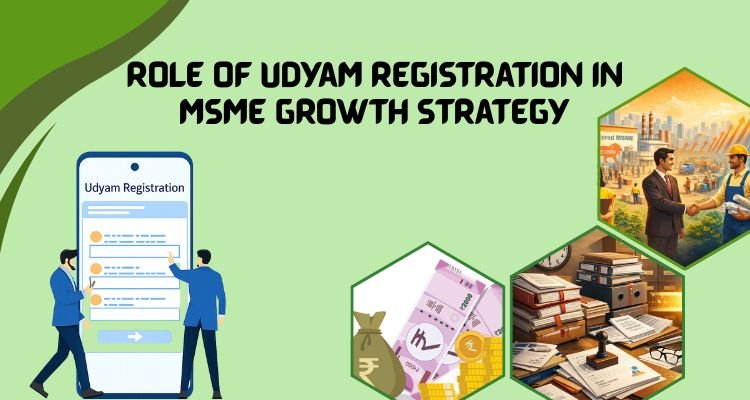
Role of Udyam registration For many MSMEs, getting a loan was once a slow and challenging process. Udyam registration changed this by offering a simple and reliable registration system for small businesses. Once registered, MSMEs gained official recognition that banks could easily trust. This made loan verification faster and reduced the need for repeated paperwork. Udyam registration also helped businesses become eligible for special MSME loan schemes and priority sector benefits. By improving transparency and trust, it significantly increased the chances of loan approval and supported the financial growth of small enterprises. How Udyam registration Revolutionized Onboarding The launch of Udyam registration turned a slow, manual process into a fast-track digital experience. It acted as a trust-builder for small firms, making it significantly easier to access subsidized capital and government perks. By allowing for direct self-registration, it removed the need for brokers and consultants, letting entrepreneurs claim their official business status in just a few clicks. Why MSME Loans Are Important Small businesses need loans for many reasons, such as: Starting a new business Buying machinery or equipment Expanding operations Managing working capital Hiring staff Handling cash flow during slow seasons Banks and financial institutions are often cautious while lending to small businesses because of risk. Udyam registration helped reduce this risk by giving lenders official proof of business identity. How Udyam registration Helped in MSME Loan Approvals 1. Proof of MSME Status One of the biggest benefits of Role of Udyam registration was that it served as official proof that a business is an MSME. Banks prefer lending to registered MSMEs because: They are recognized by the government Their business details are already verified They qualify under MSME lending guidelines This made loan processing faster and smoother. Getting Loans Faster Banks used to spend weeks checking old documents. Registration changed that: It kept all your business facts simple and clear. Verification was done instantly through Aadhaar. The certificate acted like a “green light” for bank managers. This helped owners get their loan money much sooner than before. Priority Bank Support Under government rules, MSMEs are at the top of the list for bank support. Banks are required to give a big slice of their total lending to businesses like yours. This makes it easier for you to get a loan compared to big companies. Udyam registration made it easier for banks to: Identify eligible MSMEs Meet PSL targets Approve loans with confidence This increased the chances of loan approval for registered businesses. 4. Access to Collateral-Free Loans One of the most powerful benefits linked with Role of Udyam registration was eligibility for collateral-free loans under government schemes such as: Credit Guarantee Fund Trust for Micro and Small Enterprises (CGTMSE) MUDRA Loans Under these schemes: Businesses could get loans without offering security The government provided a guarantee of coverage to banks Risk for lenders was reduced This was a huge relief for small entrepreneurs who did not own property or assets. 5. Lower Interest Rates Banks often offered lower interest rates to Role of Udyam registration-registered businesses because: Government schemes supported MSME lending Risk was shared through guarantee programs MSMEs were considered a priority segment Even a small reduction in interest rate helps businesses save a lot of money in the long run. 6. Easier Working Capital Loans Many MSMEs face cash flow issues due to delayed payments or seasonal demand. Role of Udyam registration helped businesses get: Overdraft facilities Cash credit limits Short-term working capital loans Banks trusted registered MSMEs more, making it easier to approve such facilities. 7. Support During Government Relief Programs Identifying eligible businesses Speeding up emergency credit approvals Providing moratoriums and interest benefits Registered businesses were often the first beneficiaries. 8. Improved Creditworthiness Udyam registration registration improved a business’s financial credibility. It showed lenders that: The business is serious and compliant It operates within government norms It plans for long-term growth This positive image helped during loan negotiations and renewals. Documents Required Along with Udyam registration for Loans While Role of Udyam registration simplified loan approvals, banks still required some basic documents, such as: Udyam registration Certificate PAN card Aadhaar card Bank statements Business address proof Income or turnover details However, the presence of Role of Udyam registration reduced repeated verification and confusion. Transition from Udyog registration to Role of Udyam Registration In July 2020, the government replaced Role of Udyam registration with Udyam Registration. Businesses were advised to migrate to the new system. Role of Udyam Registration continues all the benefits of Udyam registration and offers even more transparency. For loan purposes today: Banks accept Role of Udyam Registration Old Udyam registration holders are encouraged to update Loan benefits remain uninterrupted after migration Why MSMEs Should Stay Registered Whether it was Role of Udyam registration earlier or Role of Udyam Registration now, staying registered is essential because: Loan approvals become easier Government support is accessible Business credibility improves Growth opportunities increase Unregistered businesses often face loan rejections or higher interest rates. Conclusion Role of Udyam registration was a huge help in changing how small business loans work in India. It gave small shops an official name, cut out the extra paperwork, and helped banks trust business owners more. By making it easier to get loans without giving security, offering cheaper interest, and speeding up the wait time, it helped millions of businesses stay alive and grow. Even though we now use Udyam, the old system changed the way money works for small businesses. For any owner, being registered is more than just a piece of paper—it is a strong tool to keep your money safe and help you succeed.